





The Rise of Minimalist Packaging: Less is More in the Modern Age
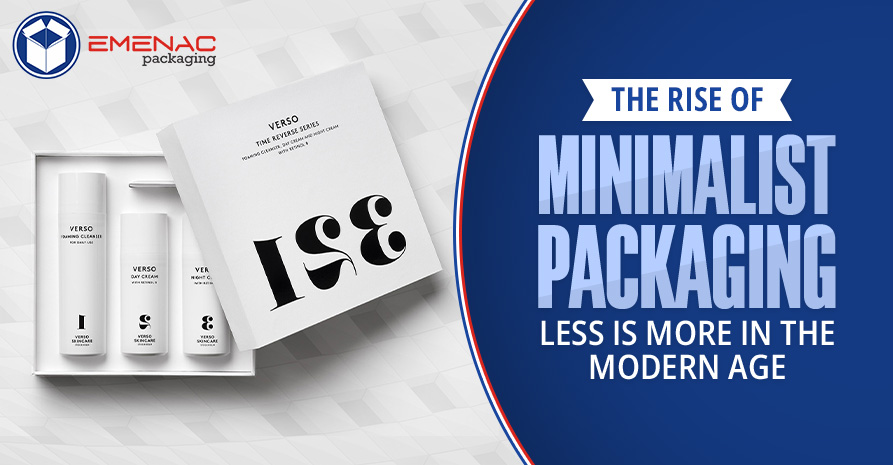
Natural-looking packaging is a growing trend where you don’t need bold colors, cluttered text, and complicated visuals to represent your brand. You can follow the principle of “Less is More” by using minimalist packaging for your product which impacts the purchase decision of around 92% of the customers estimated by the Sustainable Packaging Study. Customers are inclined toward products that use eco-friendly, biodegradable, and minimalist packaging.
Let’s explore all the possibilities of how you can incorporate minimalism in your product packaging and why minimalist packaging is a rising trend in the market.
Design Strategies of Minimalist Packaging
Minimalist packaging is all about acquiring the fine balance between modernity and simplicity. You need to choose a design and material that reflects your brand identity without losing the connection with freshness.
- Emphasis on Brand Logo
The most important things on the packaging are your brand logo and product description. You need to print your logo against a plain background that provides it more visibility and grabs the customers’ attention. It dramatically reduces the mental effort of customers to memorize your brand because they only need to focus on your brand logo only.
- Employ the Signature Color of Your Brand
Choose the background color or shade in your minimalist packaging that you commonly use to represent your brand. For instance, Tiffany uses the teal color in their packaging boxes as a signature color. The single color will calm down the customers and helps to create a specific mood that will drive the customers’ decision-making ability to buy your product.
- Use the Simpler & Readable Fonts
You can use minimalist fonts that don’t include cursive lettering, fancy swirls, and elaborative. The best font for minimalist packaging is block-style fonts as they are easy to read and have no fuss or hassle like Chivo, Comfortaa Light, Gidole Regular, etc.
- Value Art by Employing Sleek Lines
Starting in 1920, Art Deco was the first art movement when designers learned to use lines to produce industrial minimalist designs in a three-dimensional setting. Brands add these sleek lines to indicate they are connected with culture and value art. It also shows that you spend money and time to make something more sophisticated and modern for your product.
Makes Recycling Simpler
Minimalist packaging has a smaller impact on the environment because the packaging uses only one or two types of materials that make it easy to sort and recycle. The most common recycling technique is a single-steam process that is suitable for minimalist packaging because of the absence of all kinds of complicated adhesives in the packaging.
Future Orientation of Minimalist Packaging
Today customers are more aware and concerned about the environmental impact of products and packaging so they prefer to choose eco-friendly packaging. On the other hand, businesses are faces restrictions by the governments to avoid single-use packaging for their products. The best option in the scenario is Kraft boxes or corrugated boxes with minimalist designs that will also rule the future.
Conclusion
Minimalist packaging helps the brand to attract customers by using the right design strategies. It also reduces the carbon footprint of businesses and makes the recycling process of packaging more easy. Minimalist packaging uses biodegradable materials such as Kraft or corrugated that have a positive impact on the environment.

Having an ability to customize packaging boxes in different sizes, shapes and styles, Emenac Packaging fulfills the requirement of customers in lowest rate with flawless printed results. Not only we accept short and long run orders, we also use high quality Cardboard, Kraft and Corrugated materials to give you unrivaled printing and packaging solutions.
Share This


 6 Packaging Details That Make Halloween Deliveries Extra Spooky
 Columbus Day 2025 – Culture, Controversy & Commemorations
 How to Safely Ship Candles Without Breakage or Heat Damage?
 Client Appreciation Gifts: A Powerful Retention Strategy
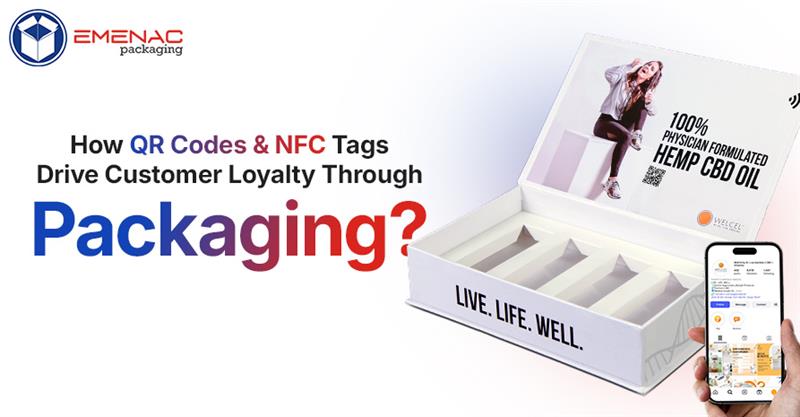 How QR Codes and NFC Tags Drive Customer Loyalty Through Packaging?